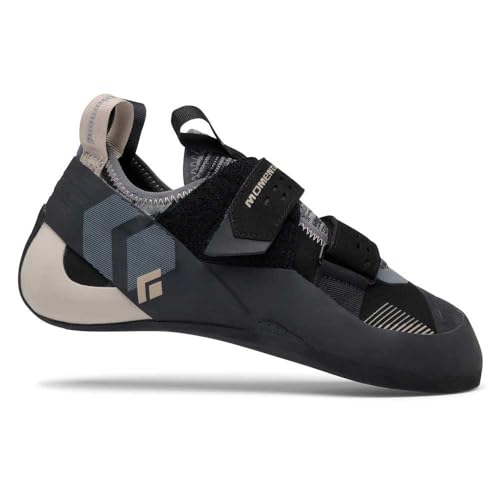
The right shoes make a real difference indoors. Beginners want a flat, comfortable shoe for all-day wear; as you progress, a downturned, aggressive fit helps on steep walls and small holds. A hand-picked selection below.
As an Amazon Associate we earn from qualifying purchases.
How to Choose Climbing Shoes
Climbing shoes are the single most personal piece of gear you will buy. The right pair depends on your level, the type of climbing you do, and how long you plan to wear them in a session. This guide covers the practical criteria that actually matter when making a decision.
Key Criteria
- Fit and last shape: Shoes come in flat (neutral), moderate downturn, or aggressive downturn lasts. Flat lasts are forgiving and suited for long sessions; aggressive lasts concentrate power on the toe box for steep or technical moves but become uncomfortable quickly.
- Closure system: Lace-up shoes allow the most precise fit adjustment. Velcro straps offer quick on/off convenience, useful in the gym. Slip-on slippers are typically reserved for experienced climbers who know their exact size.
- Rubber type and thickness: Thicker rubber lasts longer and suits beginners still learning to smear and edge. Thinner, softer rubber gives more sensitivity but wears faster — better once your footwork is dialed in.
- Lined vs. unlined leather / synthetic: Unlined leather stretches significantly over time; size down accordingly. Synthetic materials and lined leather hold their shape better and are easier to size.
Advice by Level
Beginners: Prioritize comfort over performance. A flat last in a lace or Velcro closure will let you focus on technique without foot pain cutting sessions short. Sizing should be snug but never painful — you should be able to wear them for an hour without issue.
Intermediate climbers: Once you are projecting routes consistently, a moderate downturn and softer rubber will help on steeper terrain and smaller holds. This is also the point where fit precision starts to matter more, so take time to try several models if possible.
Advanced climbers: At this level, shoe selection becomes highly specific to discipline — crack climbing, slab, sport, bouldering — and personal preference. Aggressive shoes, asymmetric lasts, and ultra-thin rubber are common, but comfort is deliberately sacrificed.
Common Mistakes to Avoid
- Buying shoes that are too painful: A common myth says climbing shoes must hurt to perform. Beginners especially should avoid this — pain leads to shorter sessions and slower progression.
- Ignoring stretch: Unlined leather shoes can stretch up to a full size. If you size them like sneakers, you will end up with sloppy shoes within a few months.
- Choosing an aggressive shoe too early: A high-performance shoe will not improve your climbing if your footwork fundamentals are not yet solid. It will only add discomfort.
Related Buying Guides
Climbing shoes are just one part of your setup. See also our guides on Climbing harnesses, Chalk & chalk bags, and Belay devices to complete your kit.