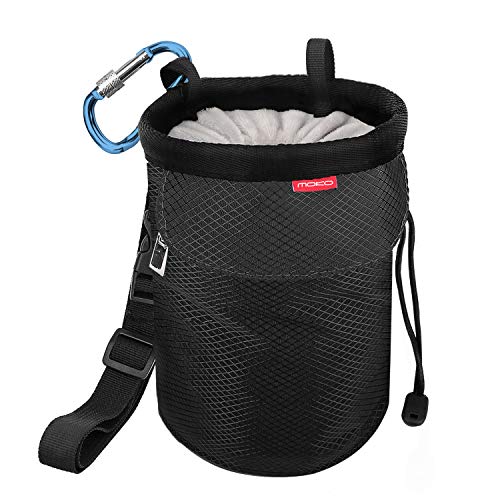
Dry hands mean better grip. A chalk bag clips to your harness or sits at your waist for bouldering; pair it with loose chalk, a chalk ball or liquid chalk depending on the gym's rules.
As an Amazon Associate we earn from qualifying purchases.
How to Choose a Chalk Bag
A chalk bag is one of the simplest pieces of climbing gear, but the wrong choice can slow you down mid-route. Here is what actually matters when picking one.
Key Criteria
- Opening size: A wider opening makes it easier to dip your hand quickly, especially useful on dynamic moves. Narrower bags lose less chalk but require more precision.
- Closure system: Drawstring closures are the standard — they seal the bag when not in use and reduce chalk spillage in your bag. Check that the cord is easy to operate with one hand.
- Stiffness of the rim: A rigid or semi-rigid rim keeps the bag open hands-free, so you are not fumbling to keep it accessible while climbing.
- Belt and attachment: Most chalk bags come with a loop for a chalk bag belt. Make sure the belt (whether included or purchased separately) sits comfortably at your lower back and does not shift during movement.
- Inner lining: A fleece-lined interior helps distribute chalk evenly across your fingers. Look for dense, quality fleece rather than thin fabric.
- Size: Smaller bags suit gym bouldering where you recharge frequently. Larger bags are better for long sport or trad routes where you want more chalk on hand.
Advice by Level
Beginners should prioritise simplicity and low cost. A basic drawstring bag with a fleece lining does everything you need while you work out your preferences. There is no reason to overspend at this stage.
Intermediate and regular climbers will benefit from paying attention to rim stiffness and belt quality, since quick and clean chalk access starts to matter more as route difficulty increases and rest positions become shorter.
Advanced climbers often develop strong personal preferences around bag shape and size. Some prefer a bucket-style bag for bouldering sessions, others a slim bag for sport climbing. At this level, fit and habit matter more than any single feature.
Common Mistakes to Avoid
- Buying a bag without a belt: Not all chalk bags include a belt. If the product is sold as a standalone bag, budget for the belt separately or confirm it is in the package.
- Ignoring chalk type compatibility: Fine loose chalk coats hands more evenly, while chalk balls reduce airborne dust. Make sure your bag opening works with your preferred chalk format — very narrow bags can make chalk balls awkward to use.
- Overfilling the bag: A bag packed too full spills chalk constantly and makes dipping your hand messy. Fill it to roughly two-thirds capacity.
Related Buying Guides
If you are putting together a complete climbing kit, these guides cover the other essentials: